The Real Difference: Interactive Stories vs Traditional Books for Ages 4–7
The Real Difference: Interactive Stories vs Traditional Books for Ages 4–7
We’ve all felt that quiet pull when choosing a book for our little one: the familiar comfort of a physical picture book versus the shiny appeal of something digital and interactive. For parents of 4–7 year olds, it's a common question—what really helps them grow, connect, and learn best?
Both formats have their magic. Traditional books offer that timeless, tactile joy: the smell of pages, the sound of turning paper, the simple act of holding and sharing. Interactive stories (digital ones with gentle narration, page flips, and light touch elements) bring something extra: participation, calm voices, and moments that feel alive. Neither is "better" in every way—they serve different needs—but understanding the real differences can help you choose what feels right for your child right now.
Many families mix both, and that's wonderful. Here's a gentle look at how they compare, based on what parents notice and what research quietly shows about engagement, empathy, comprehension, and love of stories.
The Comfort of Traditional Books: Why They Feel Like Home
Physical books have a special place in early childhood for good reason. They invite closeness—no distractions from notifications or buttons, just you, your child, and the pages.
- Tactile and sensory joy — Turning real pages builds fine motor skills and a sense of accomplishment. Kids love the weight, the texture, the way a book feels in their hands.
- Fewer distractions — No hotspots or animations pulling focus away from the story. Research often notes that print encourages deeper attention and better recall for many young readers, especially when shared with a parent.
- Stronger parent-child bonding — Cozy snuggles, pointing to pictures, asking questions freely. This back-and-forth talk boosts language, emotional understanding, and that irreplaceable connection.
For bedtime or quiet moments, nothing beats the ritual of a paper book—it's predictable, calming, and purely about the two of you.
What Interactive Stories Add: Gentle Engagement That Draws Kids In
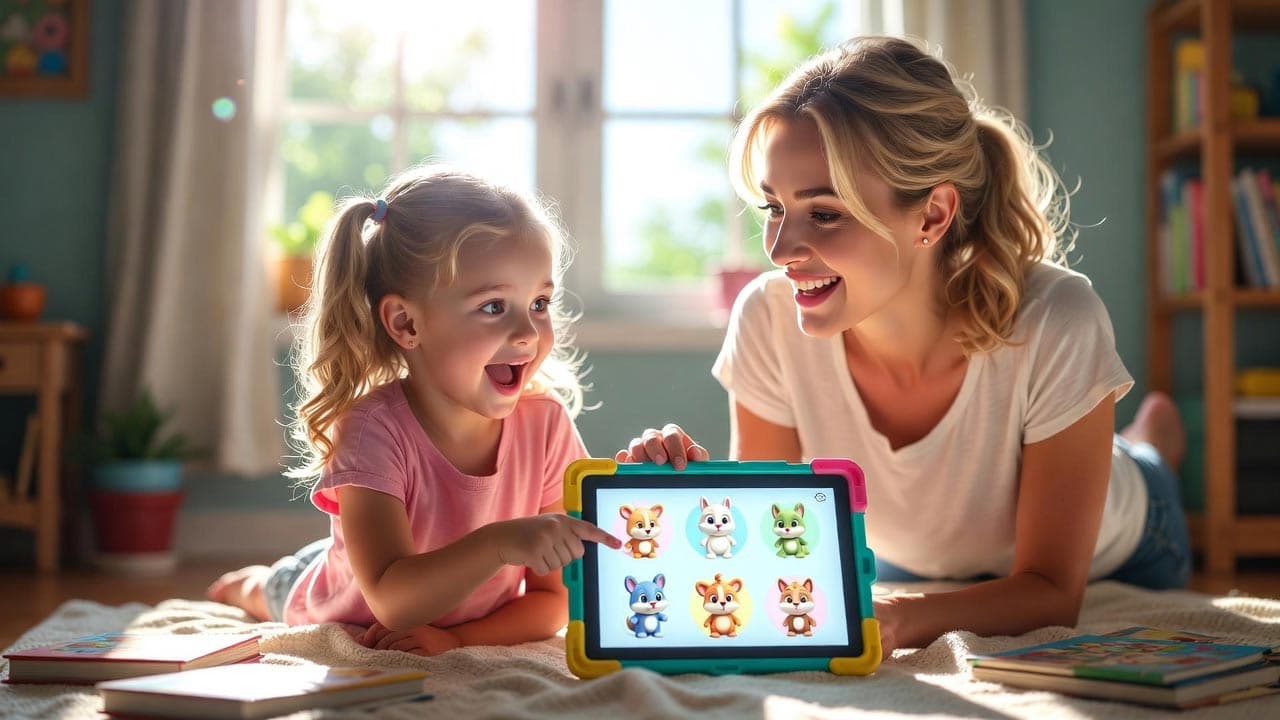
Interactive digital stories (think soft narration, real-feel page turns, and light taps that reveal kindness or help a character) aren't about replacing books—they're about expanding the ways kids can experience stories.
- Active participation without overwhelm — Gentle touches (like tapping to wave or help) make children feel part of the adventure. Studies suggest well-designed interactions—especially those mirroring the character's actions—can boost comprehension and even empathy by letting kids "try on" the story.
- Narration that supports emerging readers — A warm, grandma-soft voice reads at a perfect pace, helping kids follow along, build vocabulary, and enjoy stories independently or together. This can be especially helpful for reluctant readers or those building confidence.
- Calm focus on emotions — When designed thoughtfully (no loud games or flashes), these stories emphasize themes like inclusion, resilience, and friendship. The engagement keeps little ones immersed longer, giving more time to absorb kindness lessons and practice perspective-taking.
Parents often share that their child asks for "the one where I help the piglet" again and again—it's that sense of being involved that makes the feelings stick.
Side-by-Side: A Gentle Comparison for Ages 4–7
Here's what stands out when families try both:
| Aspect | Traditional Books | Interactive Stories (Thoughtful Digital) |
|---|---|---|
| Engagement | Deep, focused attention; great for bonding | Active participation; holds wandering minds |
| Comprehension | Strong recall and understanding (often with parent guidance) | Can match or exceed when interactions align with story (e.g., helping characters) |
| Empathy Building | Excellent through discussion and reflection | Enhanced by "doing" actions like the character, fostering deeper connection |
| Fine Motor & Sensory | Page turning, holding—builds skills naturally | Gentle taps and flips—similar feel, plus voice support |
| Independence | Needs adult reader for full experience | Narration allows solo enjoyment (with oversight) |
| Portability & Access | Easy to carry one or two; limited library | Library in your pocket; always available |
| Potential Distractions | Minimal (unless child gets fidgety) | Can occur if over-interactive; choose calm ones |
The sweet spot? Well-designed interactive stories often shine when they complement, not compete with, traditional reading. They can bridge to print by building love of stories first.
Tips for Choosing and Using Both
- Follow your child's cues — If they light up turning real pages, lean into print. If they love tapping and hearing voices, try gentle interactive ones.
- Mix it up — Alternate formats to keep things fresh. A paper book one night, a narrated interactive the next.
- Talk about feelings — No matter the format, pause for "How do you think they felt?" or "What would you do?" This is where empathy truly grows.
- Keep it calm — Seek ad-free, slow-paced interactive stories—no mini-games or loud surprises—so the focus stays on the heart of the tale.
You're already giving your child the greatest gift: time with stories and you. Whether paper or digital, the real difference comes from those shared moments.
If interactive stories with soft narration and empathy themes feel like a good fit for your family, a free 9-page sample can be an easy way to explore—no strings attached.
Try a free teaser here — sometimes that gentle extra touch is just what sparks more curiosity.
Here's to stories that grow kind hearts, in whatever form feels right. You've got this, love.
Shared with care from one parent to another at Ougalaxy
Recent Posts

How to Get Your Kid to Eat Broccoli (Without the Dinner-Table Battle)
Jun 25

Why More Parents Are Choosing One-Time Purchase Kids Stories in 2026
Feb 25

How a Soft Narrated Voice Helps Kids Relax and Love Story Time
Feb 19

Why Interactive Stories Are the Best Way to Teach Empathy to Young Kids
Feb 19

6 Positive Screen Time Ideas Parents Actually Feel Good About
Feb 12